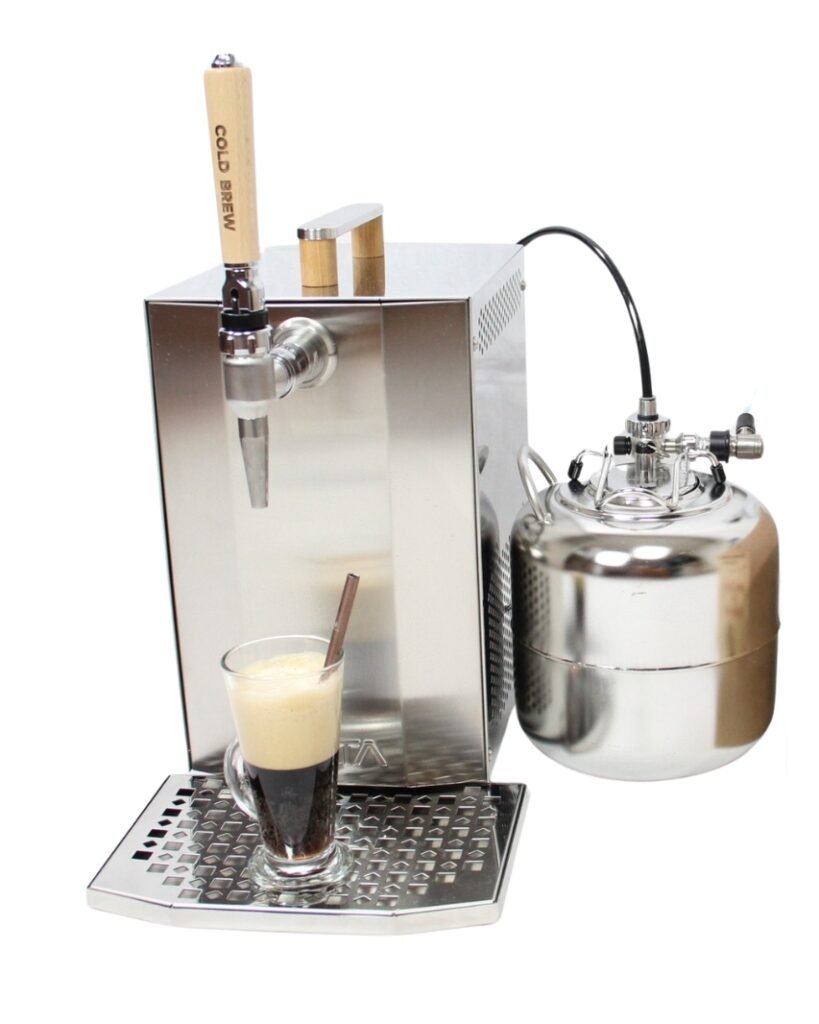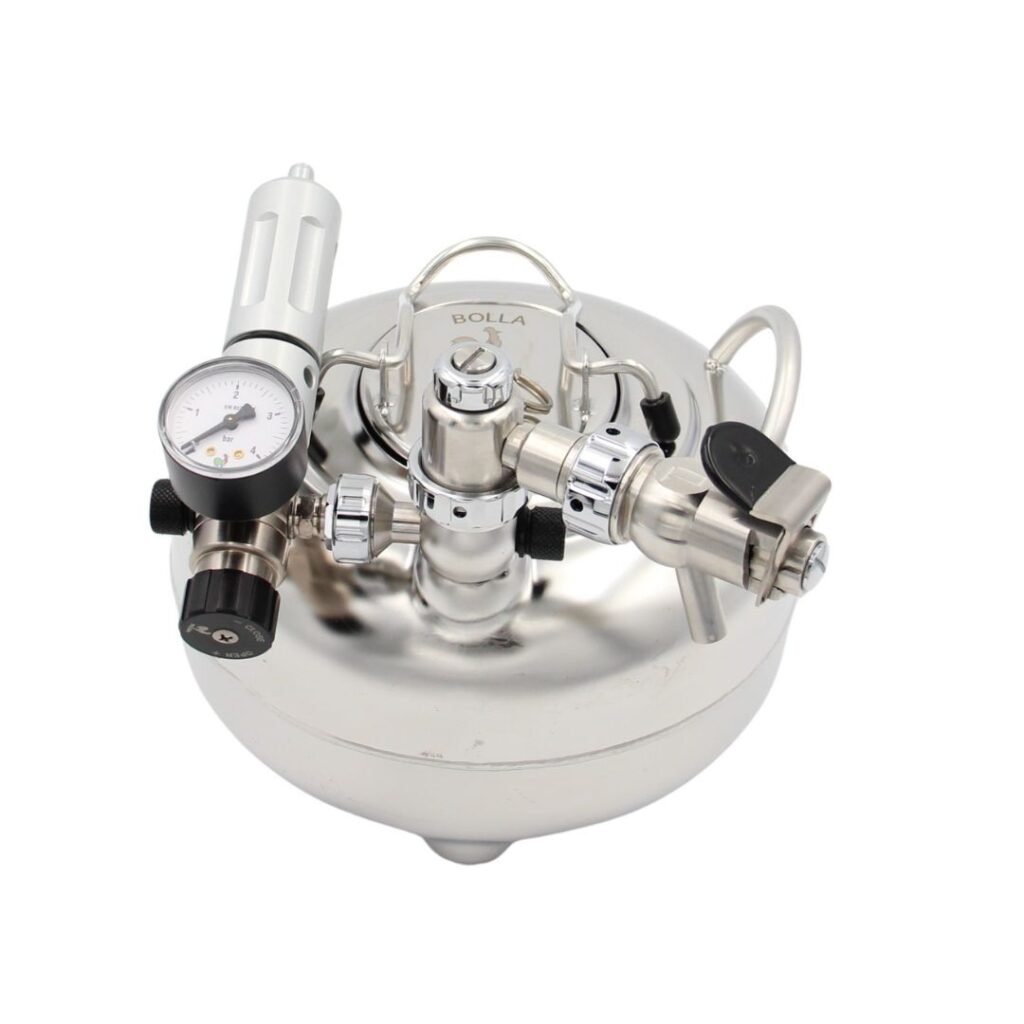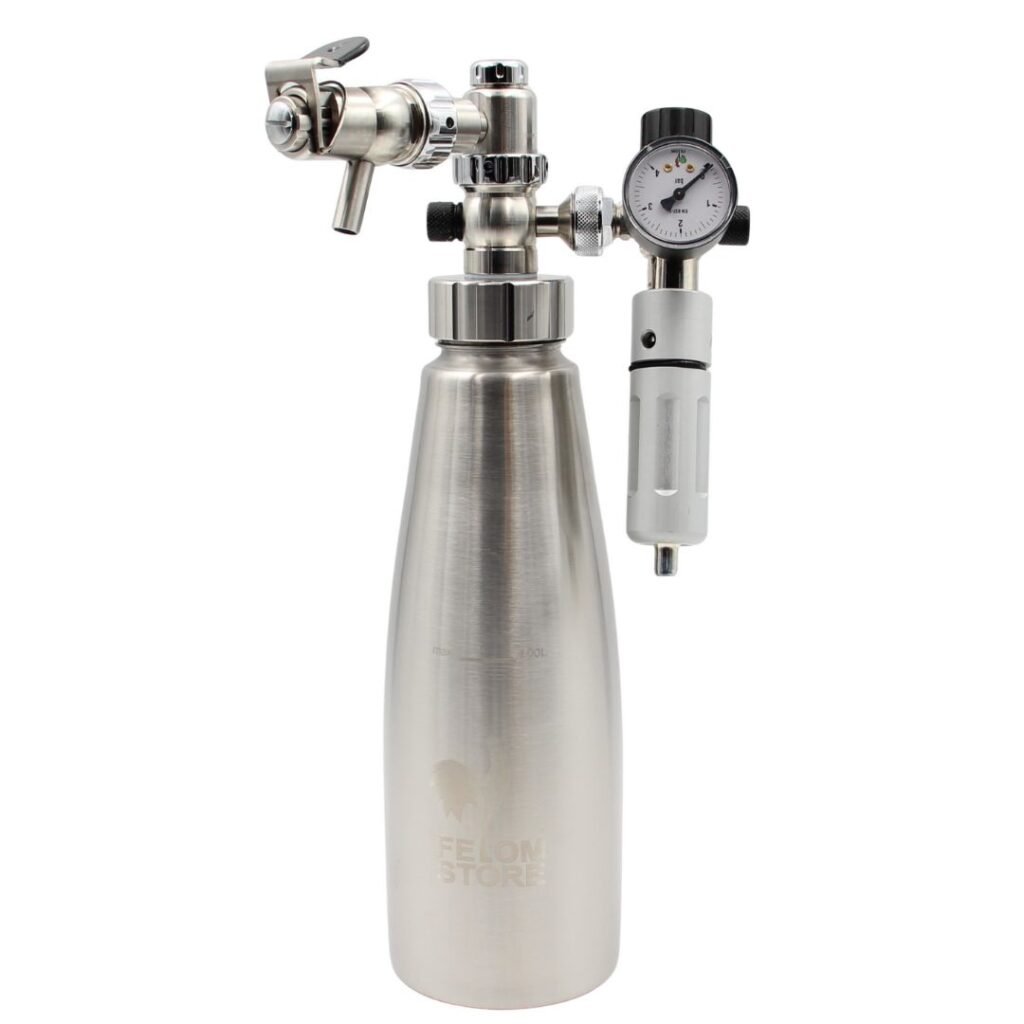

A perfect pour depends on the balance between CO₂, temperature, and the system. Even small variations can cause excessive foam or a flat drink, so adjusting the pressure regulator and balancing the system are crucial.
CO₂ dissolves best in cold liquids. The ideal range is between 2°C and 4°C.
At these temperatures, CO₂ remains more stable in the liquid, reducing foam formation during dispensing and resulting in finer, more uniform carbonation. As the temperature increases, CO₂ is released more rapidly, causing instability in the dispensing process.
Pressure alone is not enough — the entire system must be balanced.
The main factors are line diameter, line length, and maintaining a constant liquid temperature.
The standard configuration of the FELOM system includes 4 mm tubing, a length of 1 meter, a temperature between 2 and 4°C, and a pressure of around 2.5 bar.
This balance allows for controlled flow and reduces CO₂ loss during dispensing.
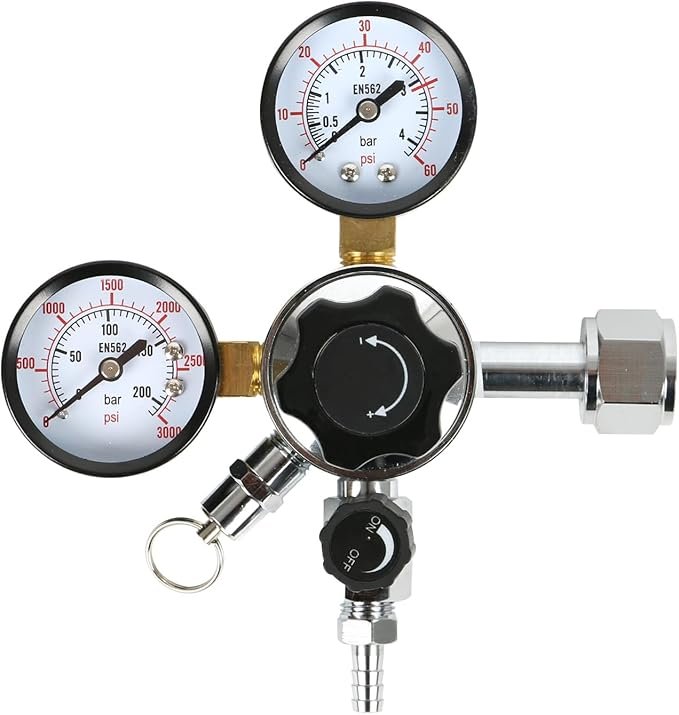
The high-pressure gauge indicates the CO₂ present in the cylinder.
The pressure remains nearly stable as long as liquid CO₂ is present and drops rapidly as the cylinder runs low.
The low-pressure gauge is the most important for beverage quality, as it indicates the actual working pressure within the dispensing system.
CO₂, controlled temperature, and a balanced system result in a perfect beverage. When these elements are in equilibrium, carbonation remains stable from the system to the glass.
CO₂ regulation is a crucial factor in the final quality of the beverage. A well-designed and balanced system allows for consistent, clean, and professional dispensing.
The FELOM system is designed to maintain this balance simply and reliably, even in compact setups.